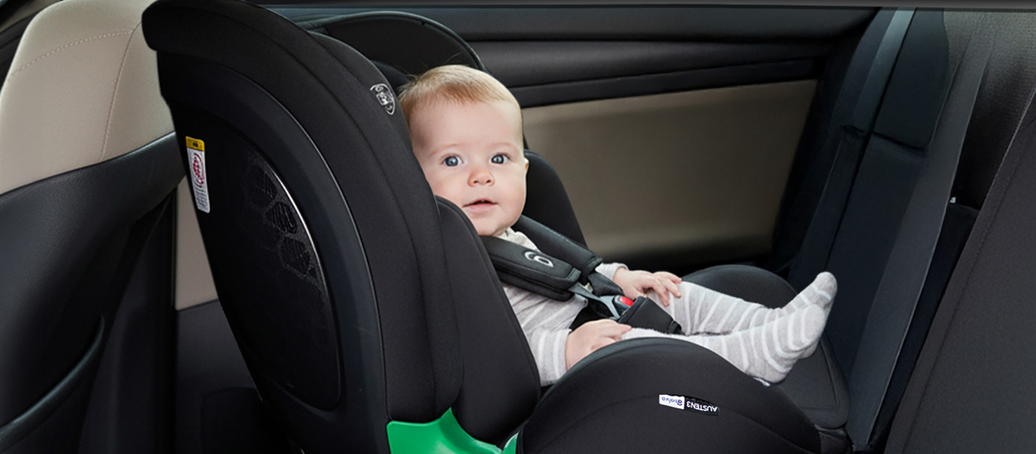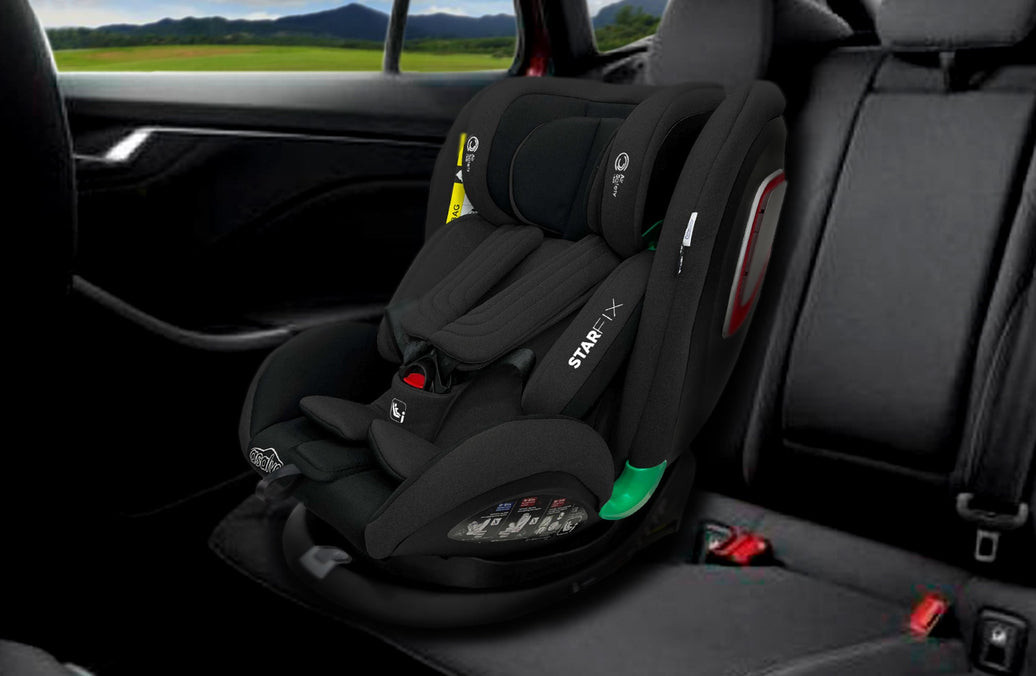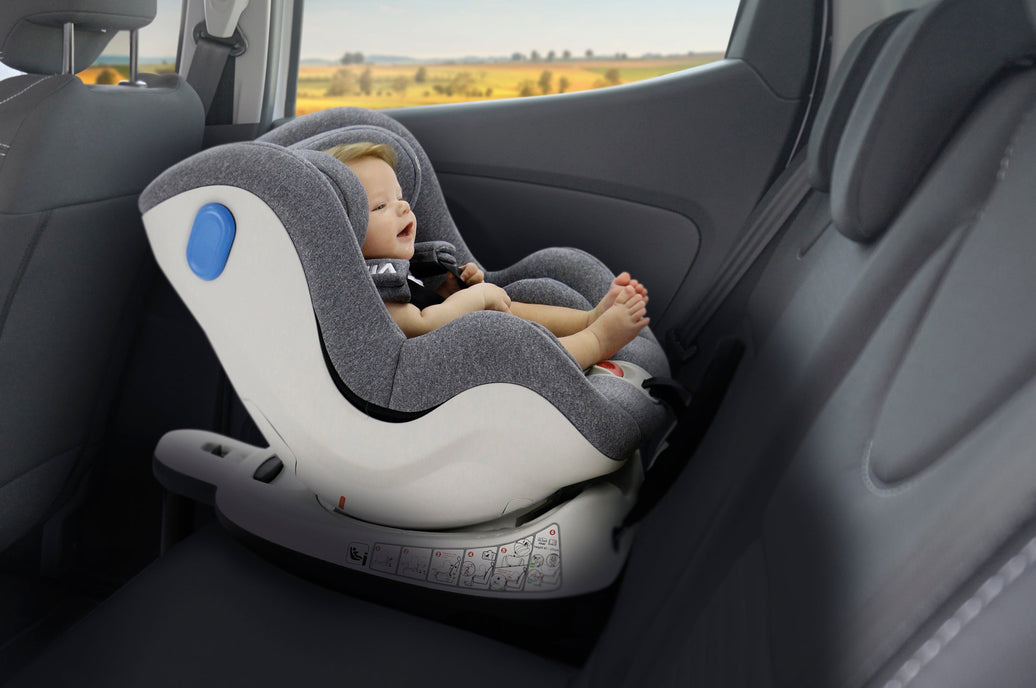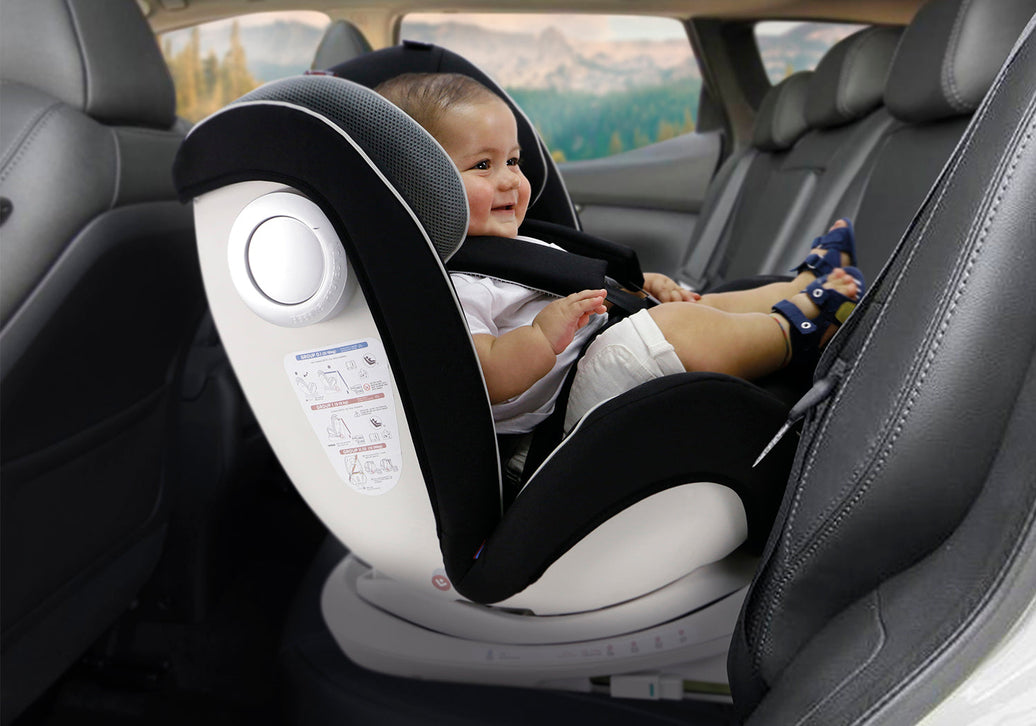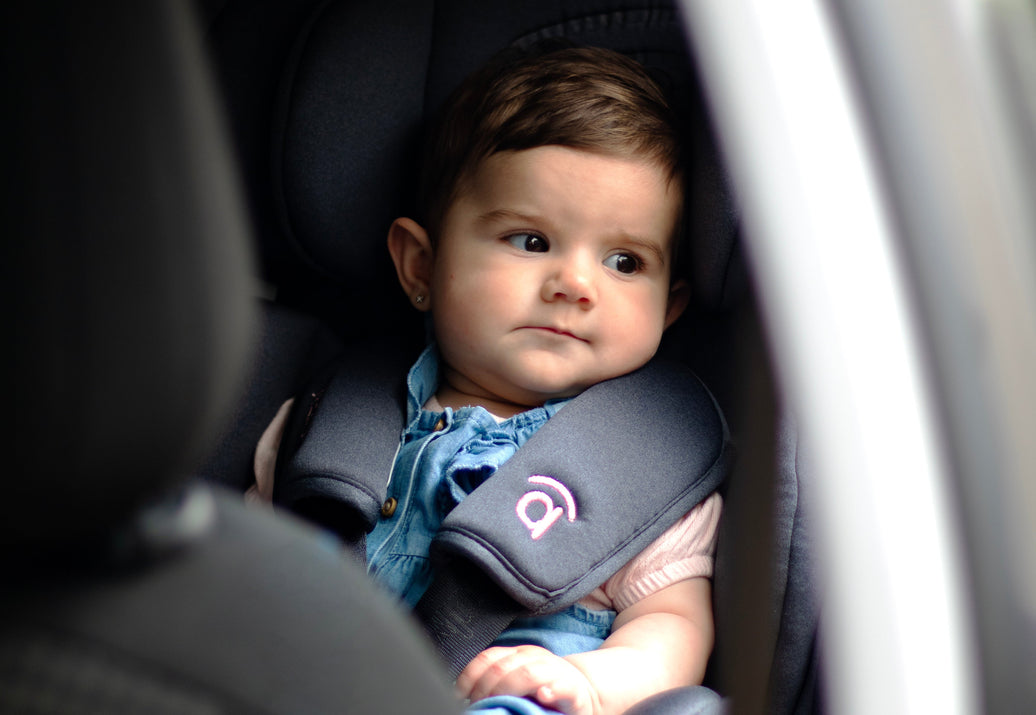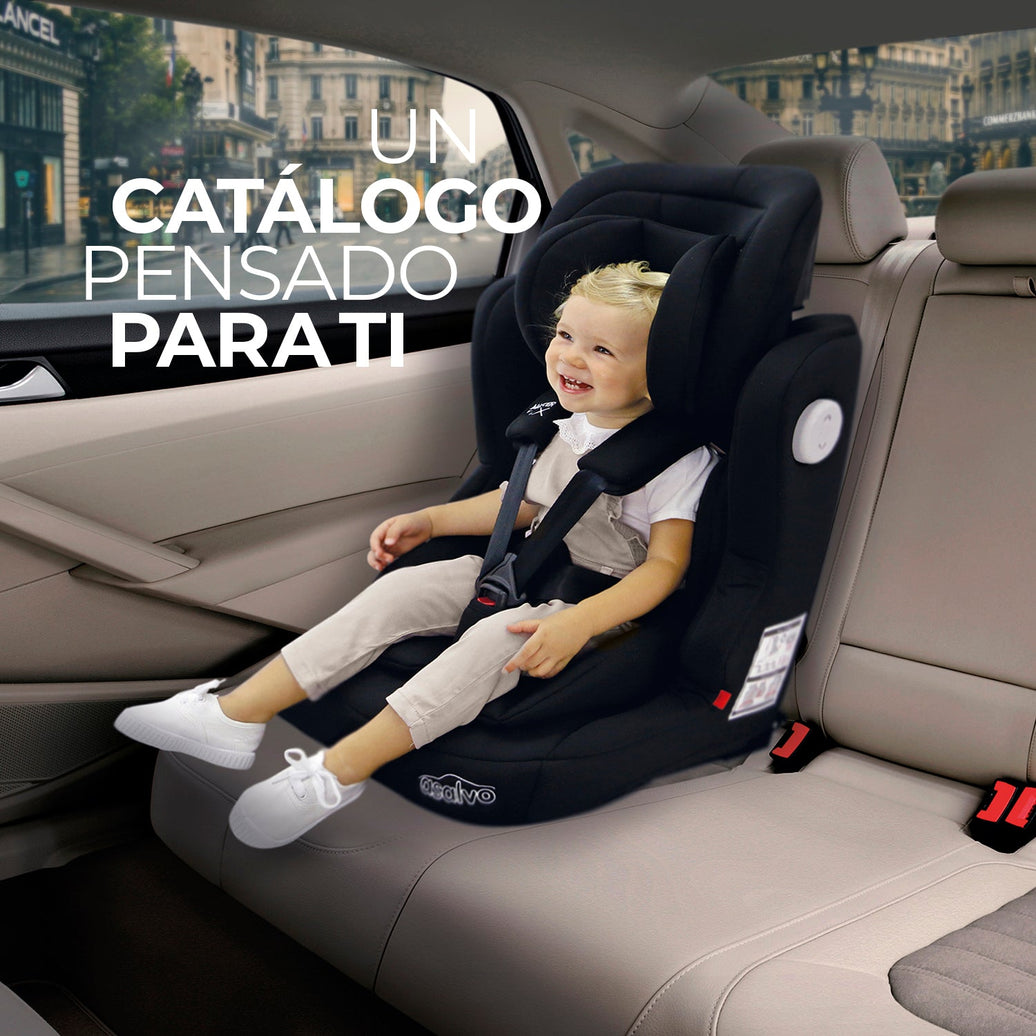
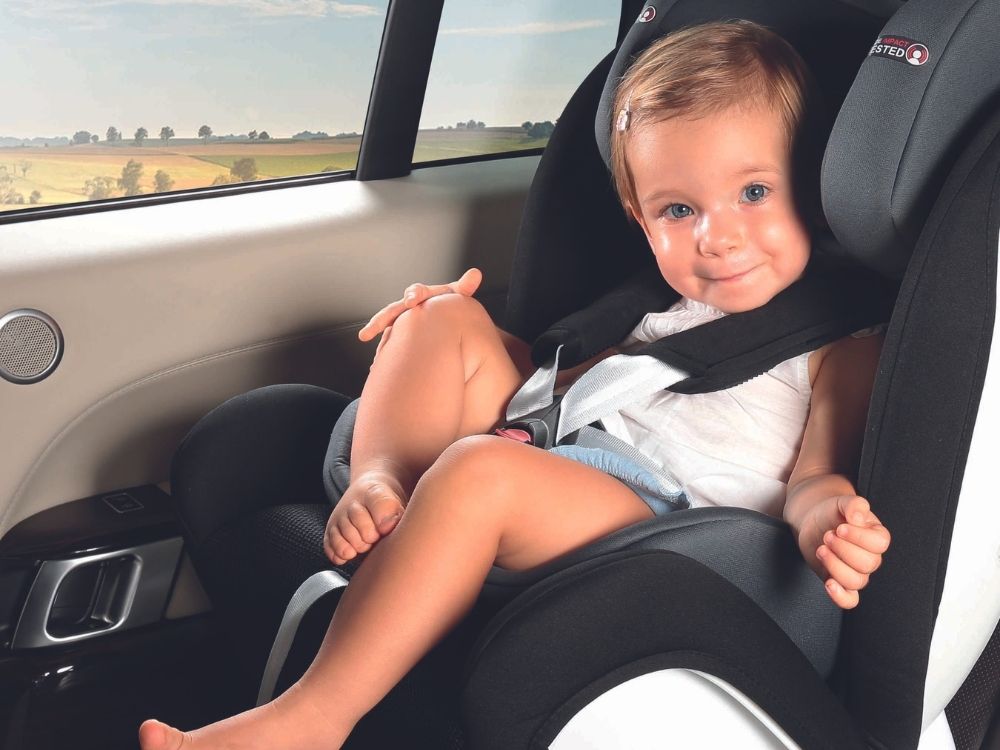

Now that you have begun to see all the things your baby will need, you will have observed the large amount of information about car seats out there. Car seats are also known as child restraint systems (CRS).
In subsequent posts we will try to give you all the information possible, so that you can have everything clear when the time comes to buy your baby's car seat. Never forget that the chair car is, how many things you buy for your little one, the most important.
But now let's try to answer several general questions that new moms and dads ask. Once you are clear about these general aspects, it will be time to see types of seats, anchors, brands, try it in your car, etc. But we don't want to overwhelm you with so much information. Let's go little by little.
Until what age should a child be in a car seat?
We will not give the answer in years, but in centimeters. A child in Spain must be in a chair up to 135 cm tall. (inside the chairs are included the so-called boosters or boosters which, although they may be approved, are not the best option. Much better with backup). The mandatory level is established at 135 cm, but there is a growing consensus that it is advisable to extend its use up to 150 cm, because it is at this height that the car belt is in the correct position so that it comes out from the collarbone diagonally downwards.
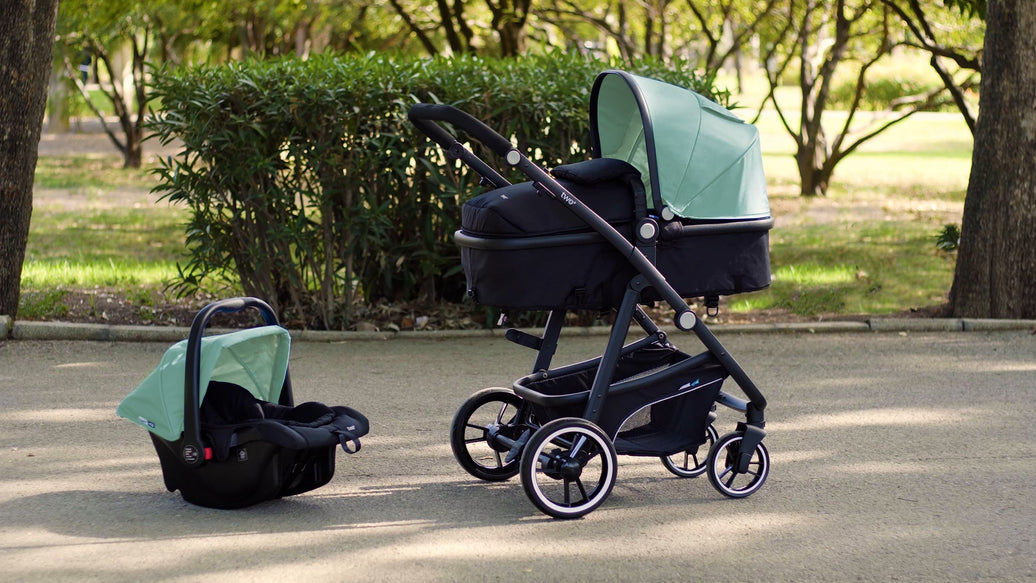
Can I use Group 0, egg or cuckoo in the car for the first few months?
The answer is YES. And to this YES, we make two qualifications. The first is that YES, as long as it is approved, because there are very old ones with regulations R44/03 (nor R44/01 or R44/02) that can no longer be used. And the second is that YES, but perhaps it is not the most recommended option.
If a car does not have ISOFIX, can car seats that comply with the regulations be used?
The answer is emphatically YES. If a car does not have isofix, it is not the end of the world, as some parents think, when they see that all or almost all the seats in the stores come with it. Car seats can be installed in cars without ISOFIX, but not all (for example, chairs from 40 to 105 cm with the new I-size regulations cannot be installed). That's what the instructions for each chair are for, to first tell you how to install it. Isofix is a very safe restraint system, but it does not mean that a chair that does not have it is not safe.

Can children sit in the front seat?
The general answer is NO, but the regulations establish two exceptions:
two-seater cars
Given the peculiarity that two-seater cars do not have rear seats, The law allows you to place the car seat in the front seat.
Rear seats occupied by other car seats
If the rear seats are occupied by other seats, The law allows it to be placed in the front seat. However, there are several assumptions that need clarification.
1. You are the only adult in the car
If you are the only adult in the car, the child cannot sit in his car seat in the front seat because you think that this way you see it better and the child is calmer. No, they are not reasons.
2. The older brother/sister is less than 135 cm tall
The older brother cannot go either, if he is less than 135 cm tall., in front because the baby is behind and to control him an adult sits behind him. No, an adult cannot occupy a space that can fit a car seat.
3. There is no space for a third chair in the rear seats.
The only question that is more than reasonable is the following: what do I do if a third chair does not fit, something that often happens? here We would tell you to apply common sense, and look for alternatives before placing a child less than 135 cm in the front seat.
- Don't force the chairs to fit, if this will mean that the chairs are not properly placed.
- If they still don't fit you can try putting the chairs with the backrests locked, that is, some in the direction of travel and others in the opposite direction, as long as this does not mean placing children in the direction of travel ahead of time. An alternative is, for example, that if one of the children is over 2 years old, they should be the one to go in the direction of travel, although this is not desirable. IF this does not convince you or they still do not fit, you have to continue looking at options.
- If your three chairs don't fit, maybe you can. buy a new one to replace one of the wider ones you have. There are manufacturers that have narrower seats, and a not very large investment would allow you to carry three children in the back seats.
- There is an alternative that can also solve it in some cases. If any seat is dual (that is, it can be installed with a belt or with isofix), you can try installing it with a belt on the side seats, since the isofix center the seats more. It is true that the chair you will move will be closer to the door, but that is why we told you to apply common sense: we look for the best solution, even if it is not perfect.
All this is valid for the so-called cuckoos, eggs or Group 0 to which we referred previously.
In the back of the car, where do we place the car seat? What is the safest place to place it?
This answer is perhaps the most complex of how many we try to give you, because there are many factors to analyze, and what in one case are advantages, in another may be disadvantages.
central square
The central square, according to statistics, is the one with the least accidents.. But in most cars it is not a complete seat and does not come with ISOFIX. This seat is further away from the doors, with the consequent advantage that this represents in the event of a side impact, and also in the event of a frontal impact, children who would be traveling in the direction of travel would not collide with a rigid element such as the front seat. IF you are going in reverse gear, the fact that you hit the front seat is not considered, neither in the central seat nor in the side seats.
The rear seat for the driver
The seat behind the driver would have the advantage that, by a reflex act, this would tend to protect itself from the impact, and therefore indirectly to those who are behind. But for many parents, the fact that it is the square where they see their little one the least creates nervousness. A nervous father is not a confident father.
The rear seat to the co-pilot
The seat behind the co-pilot is For many parents, a better option because they can see the little one better diagonally., but the opposite is true regarding the swerve What the driver would give to protect himself.

Think about where you are going to park
Perhaps we also have to take into account where we usually park the car, because we can introduce an indirect element of insecurity not in the driving itself, but at the moment of removing the child from the seat and the vehicle. Depending on whether we park on our right or on our left, andaccording to the direction of traffic On that road, we will be more exposed to being run over or hit, while we take the little one out.
How long does a child have to go rear-facing?
This is undoubtedly one of the big issues in everything related to child safety. When we say has to go, We are talking about obligation. If your chair is approved with the R-44 regulations the obligation is up to 9 kg, and Yes it is with the R-129 the obligation is up to 15 months (more than 9 kg).
So that you understand us, this would be what the law says, and if you comply with it you are not committing an infraction, you will not be fined. But if we conceive the chairs as fine remover, we are doing something wrong. Hold your baby as long as you can in rear facing, preferably until almost 4 years of age: the child does not get dizzy, the child does not get bored and he is not in a bed so that he has to be fully extended. Get him used to crossing his legs and you will be protecting him.

The child is no longer comfortable with the harnesses, can I take them off and hold the child with the two-point belt?
The answer is NO, because it is not a matter of comfort but of security. If your child is rear facing, the harnesses can be used up to 125 cm or 22 kg. If, on the other hand, it goes in the direction of travel, it is strictly up to 18 kg, since they are approved to support that weight.
However, height must also be considered: If you remove the harnesses, the child should be tall enough to be properly secured with the car seat belt., that is, from the clavicle downwards diagonally. Many parents ask us why group 2-3 seats don't have harnesses, and the answer is simple: because if you put your child in that type of seat, it is because he or she is tall enough for the car seat belt to fit well, and the seat belt is the safest and most appropriate system for children taller than 1 meter in the direction of travel.
The issue of car seats is the one that always raises the most doubts among parents. We hope to have resolved the most general doubts. In we will try to give you answers to more specific questions: do not forget that information is essential for choosing the car seat. Your baby will thank you for asking everything related to his safety.
Where to buy a car seat with the best safety-price ratio
Now that you have resolved all the doubts that the use of the car seat generates, you will like to know that you can buy one for less than you imagine. The baby's safety is the most important thing and, far from what it may seem, It is not necessary to invest a fortune in a car seat.
At Asalvo we are specialists in childcare products, among which are car seats. In our Online Store You can find different models with a great safety-price ratio. Visit our website, you will surely find the ideal chair for your baby!