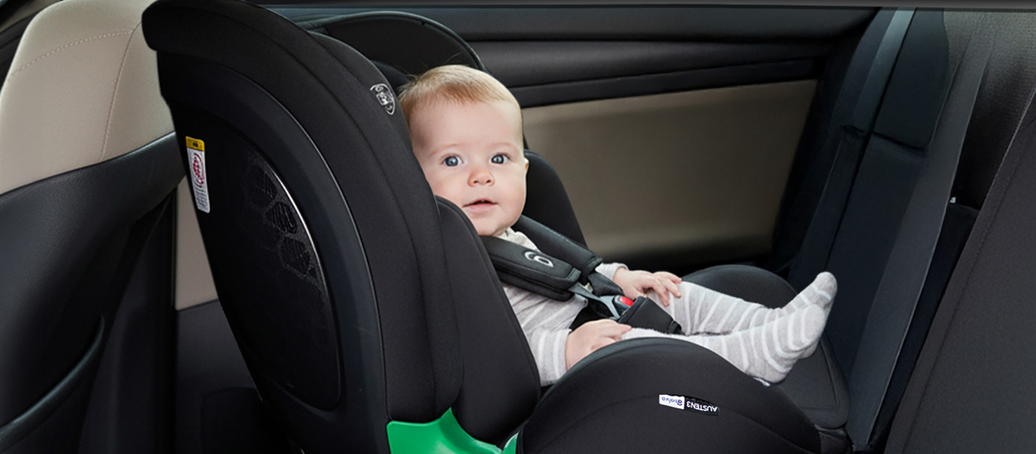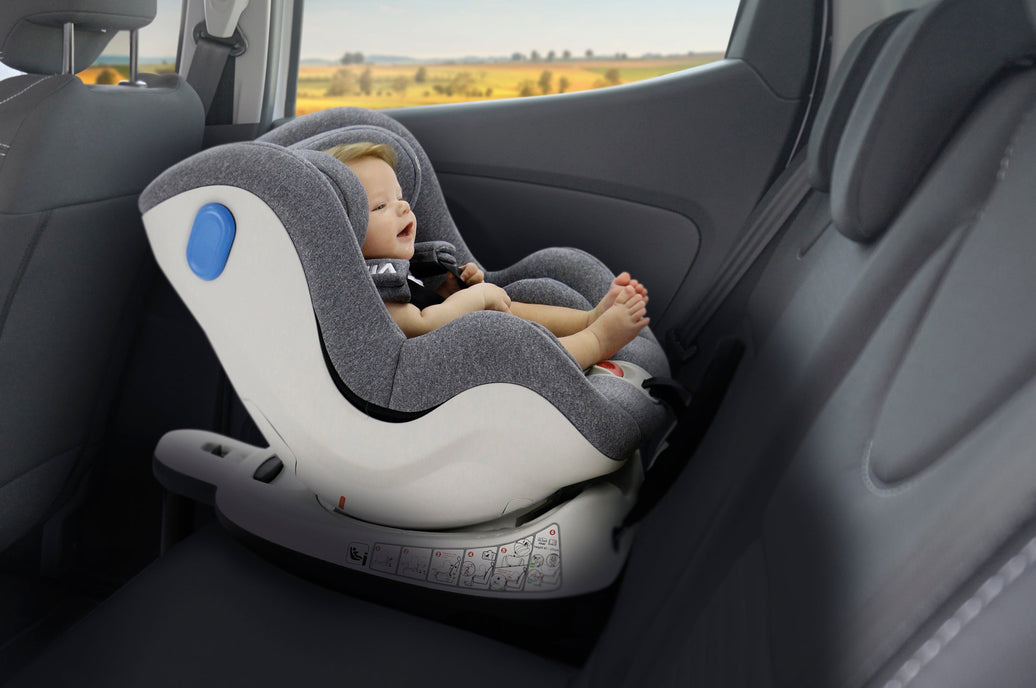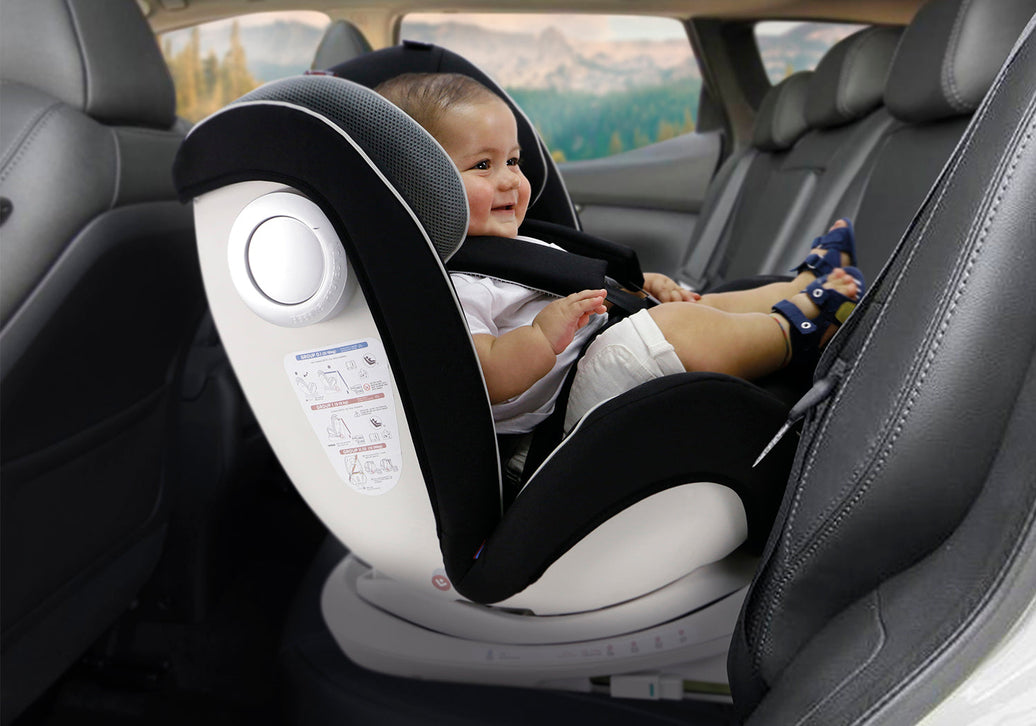
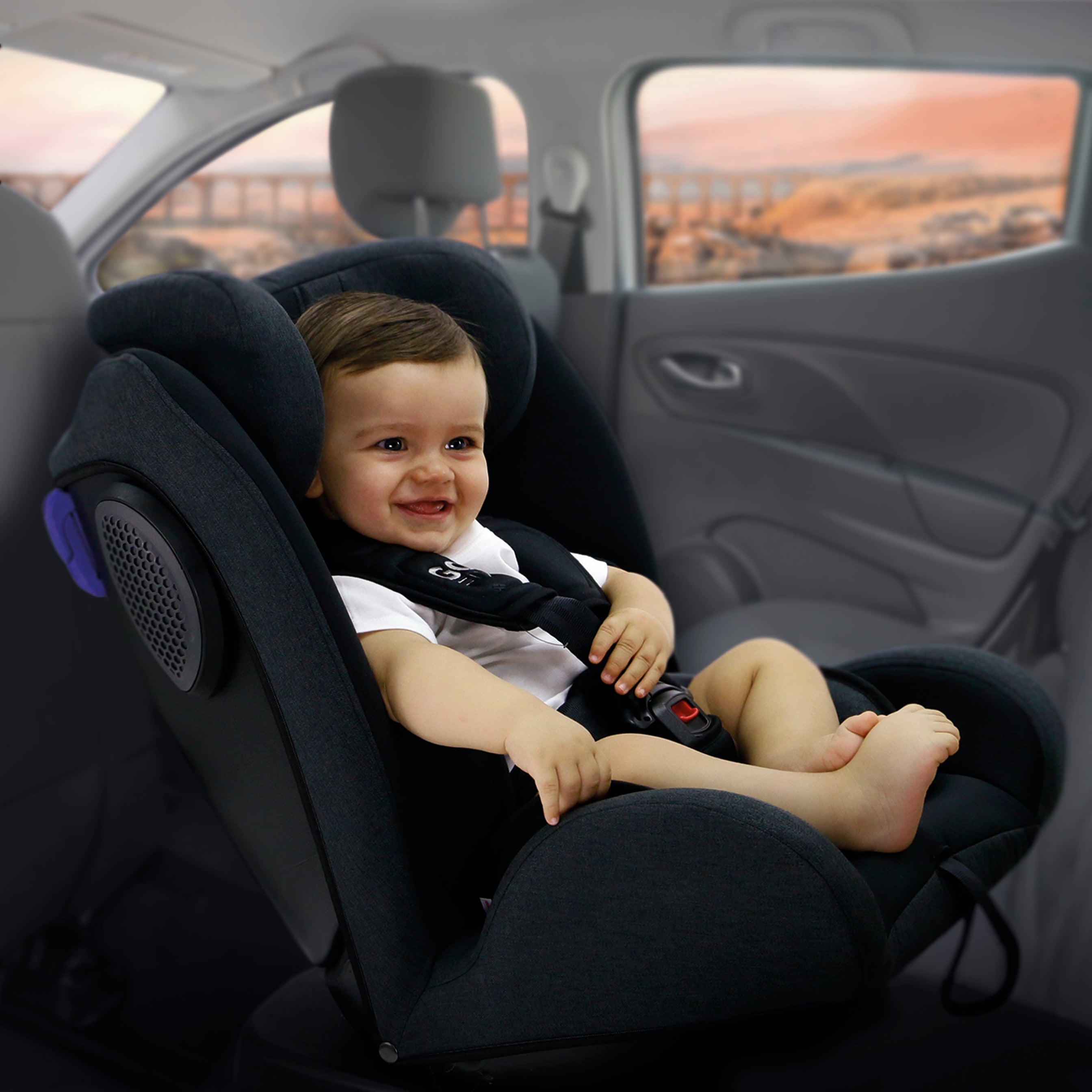

On some occasion, we have told you that with the new Traffic Law, which came into force on March 21, 2022, the penalty for not using car seats, also called child restraint systems (CRS), when applicable, will increase from three to four license points, although the financial amount of the fine will remain at 200 euros. The new law incorporates a new cause of sanction and it is the fact of misusing the different elements that make up the seat: poorly anchored isofix, incorrectly fastened belt, excessively loose harnesses... Naturally, the partial loss of points and the fine are minor evils if we compare them with the insecurity they represent. Always remember that you should not conceive of a car seat as a fine remover, but as what it really is: a way to protect the lives of the little ones when traveling by car.
Although surveys on the use and installation of child restraint systems (CRS) carried out both by official organizations and by the companies that market them seem to indicate that there is increasing awareness regarding safety, and that therefore they are used correctly (including installation), the reality is that inappropriate use of car seats is still very common. We are going to summarize the most common mistakes that are made with them, because we want you not to be in the statistics of dads and moms who do it, but above all because the safety of the little one in the house is what matters most to us.
-
DO NOT USE THE CORRESPONDING CAR SEAT BY WEIGHT OR HEIGHT. Car seats are designed and approved for use with children with a weight in kg or height in cm. It is important that you look at the technical and safety characteristics of the car seat, but before that make sure of the weight and height range for which it is approved. This is closely related to the regulations with which the chair has been approved. We clarify it for you: as you probably know, there are two current regulations that use different parameters for their approval. Car seats approved with regulations R-44 are defined by groups (group 0, up to 9 kg; group 1, up to 18 kg; group 2 up to 25 kg and group 3 up to 36 kg). Car seats approved with regulations R-129, also called I-size They are approved by centimeters, but it is not common to make mistakes with them because precisely by homologating the chairs by centimeters one of the things that was intended was to cover a larger child population and prevent mistakes from being made.

-
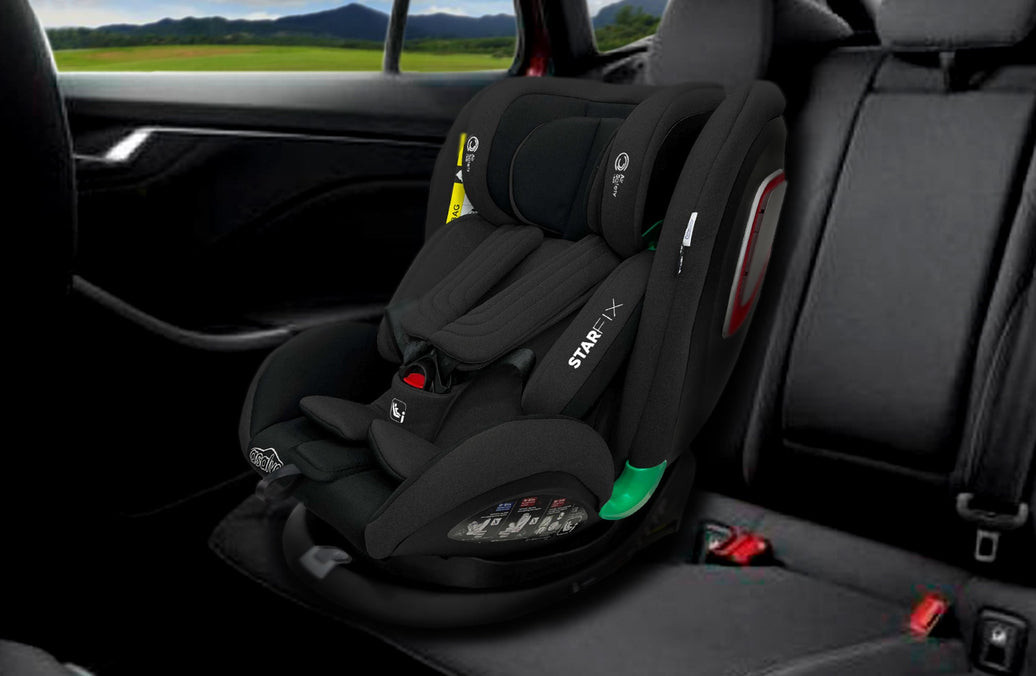
NOT ALL CAR SEATS ARE FIT FOR ALL CARS. When the new regulations began to be implemented R-129, or regulations I-size, one of the objectives was that the seats could be used in more cars, that is, that they were more universal. This is so and it is true, but we must think that a large part of the Spanish automobile fleet is old, and the seats I-size They are not the best option. We are still on the long road to making CRS compatible with all vehicles. You may find useful the label that all car seats come with, which establishes their semi-universal or universal character depending on whether they are installed with a belt or with isofix. But you must also take into account the characteristics of your seat: inclination, curvature of the backrest, dimensions... We give you examples of cases in which a certain car seat is not appropriate for a certain car:
-
If you install the car seat in your vehicle with isofix, and the seat has top-teether but not your vehicle, the seat is incorrectly installed. You have to use the seat belt if the seat is dual.
-
If you install the seat in your vehicle and most of the base is exposed, that is, it is not supported, it is not a good choice.
-
If your car has very inclined seats, which is common in many sports cars, for the seat to be appropriate it must have the appropriate inclination so that the baby is in a sufficiently reclining position so that his head does not fall forward (remember that if he is a small child, he does not yet have the autonomy to control it).

-
PLACE A CAR SEAT IN THE FRONT SEAT. It is strictly prohibited unless the vehicle does not have rear seats or the rear seats are occupied by other seats. That is, you can place the chair in the front seat if it does not fit because there are other chairs behind it, not because there are adults behind it. If you were to place it in the front seat, it is important that you do not make a very important mistake: the AIRBAG of that seat must be deactivated.

-
INSTALL A CAR SEAT WITH ISOFIX BUT WITHOUT THE ANTI-ROLL SYSTEM. In a very summary way, we remind you that when you are in the car, you have three attachment points to the seat, which are the three of the seat belt. When you install a car seat with Isofix, it necessarily needs a third attachment or support point, which also acts as an anti-rollover or anti-rotation function. This may be the support leg, the low-tether or the most frequent top-tether, which are the ones that lead to the greatest number of errors. It is very common to find seats installed only with the isofix without using the top-teether.
-
INCORRECTLY INSTALL THE TOP-TEETHER. We told you before that it is very common to find seats poorly installed in cars because they do not use the top-tether. It is also a very common mistake to use it inappropriately, mainly not putting it taut enough and not holding it in the place that your car has specially designed for it. Always remember that installing a car seat incorrectly is unsafe.
Whenever we share information about car seats with you, although sometimes it is even very obvious, we are thinking about the safety of your baby. We do not want you to make these frequent mistakes, nor others, also important, that we will detail in subsequent posts. And always keep two maxims in mind:
-
Put yourself in the hands of professionals when choosing your car seat, do not buy seats in places that are not specialized and do not use second-hand seats.
-
Don't hesitate to ask any questions you may have. More information is always the best choice.