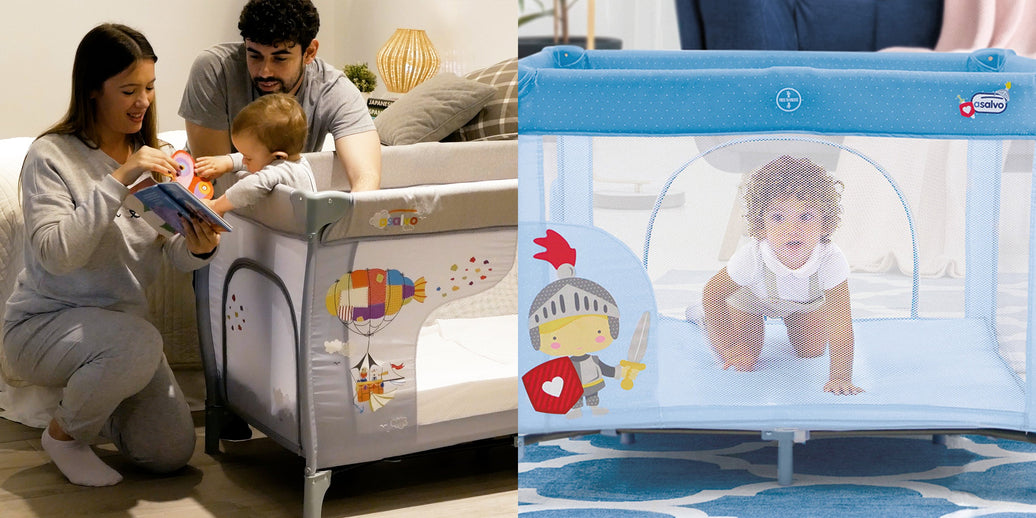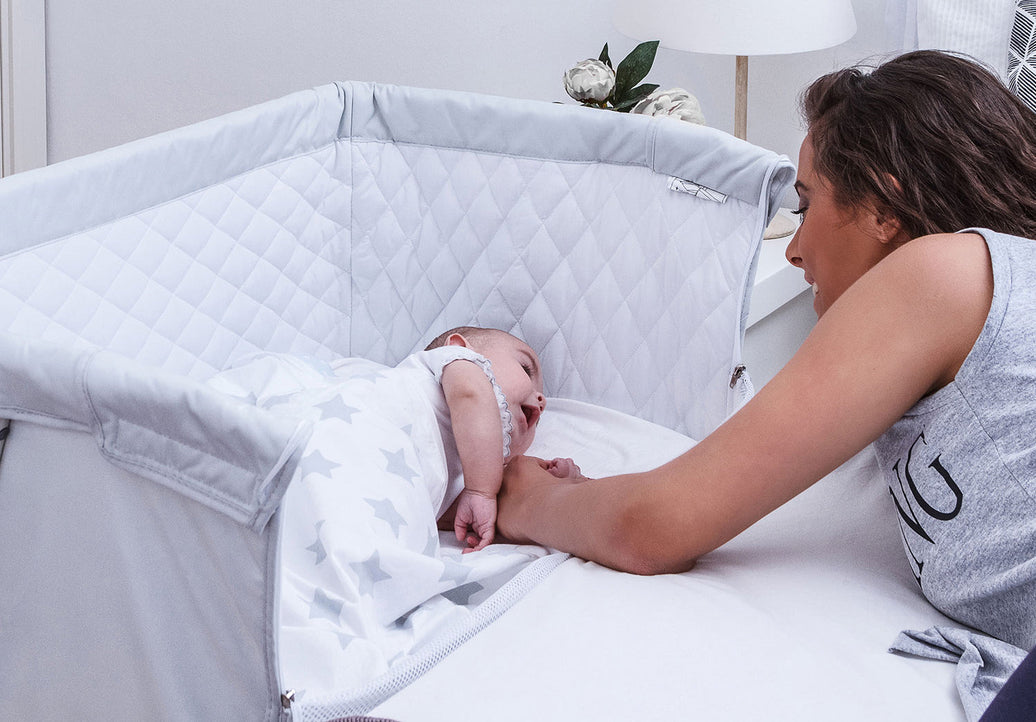

A few years ago, the word co-sleeping It was an almost unknown word in our country and even today there are many moms and dads who are surprised in childcare stores when they hear for the first time about mini-cribs or co-sleeping cribs.
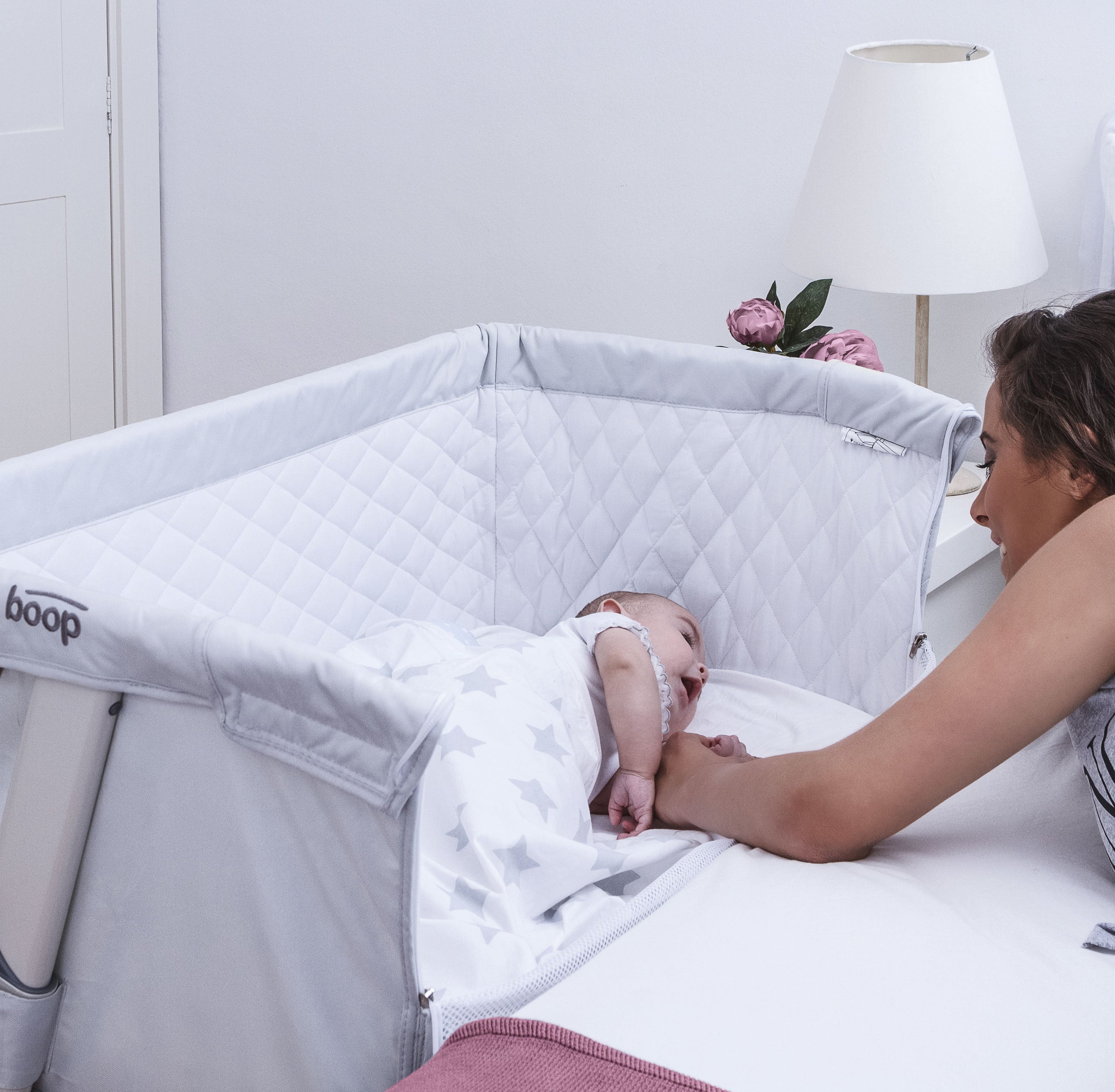
We are going to try to give you all the information possible in relation to mini-cribs and co-sleeping cribs, but first it is advisable to make a few brief observations about what the co-sleeping as practice. Practice the co-sleeping It is nothing other than sharing a bed with your children. Since time immemorial, parents and children have shared a bed and in some cultures it is a fairly common practice well into the children's age. By extension, we can say that it is practiced co-sleeping not only when you are in the same bed, but also when it comes to attached beds or bassinets, minicribs or cribs attached to the children's bed.
Although in certain circumstances it may be inadvisable, the co-sleeping As a practice, it has numerous advantages for both you and your baby, especially in the first months of the child's life. And it is about this, but focused only from the point of view of co-sleeping mini cribs and co-sleeping cribs, that we want to talk to you about. We want to invite you to continue reading this article that we have prepared for you, but an important consideration must be made at this point. You will not be a better or worse mother or father because you decide to do so or not. It may seem obvious, but in our society there is a special tendency to demonize those who do not follow certain behaviors or guidelines, which, more or less fashionable, seem to be the only way to do something, in this case the only way to be parents. Study the advantages that we are going to tell you below, but if you do not practice the co-sleeping Under no circumstances will your reasons always be your reasons and they will be perfectly acceptable and as valid as those of those fathers or mothers who decide to use a mini-crib or a co-sleeping crib for their baby.
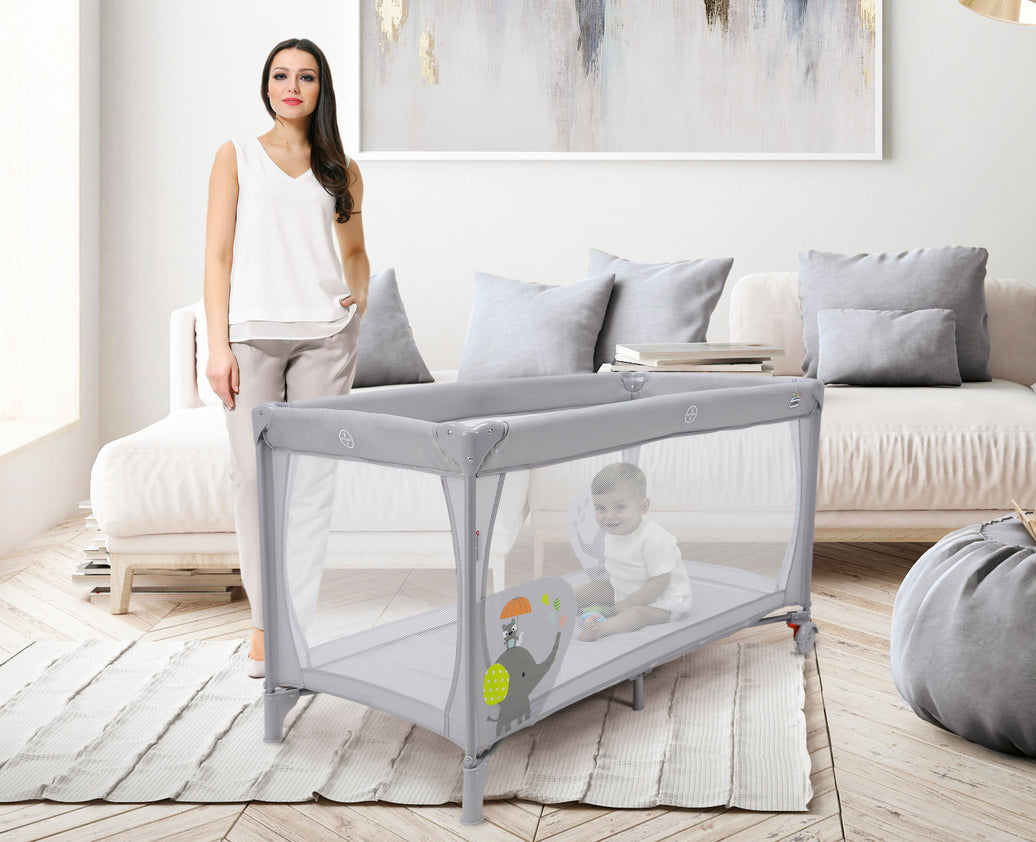
At the outset we will tell you that we recommend the use of little co-sleeping and not co-sleeping cribs, and in fact in stores you will find more mini co-sleeping cribs than co-sleeping cribs: the reason is merely normative, that is, a reason to comply or not with the standards required by the competent bodies in the matter. We are not going to overwhelm you with technical issues, but you should know that the European regulation that all cribs and folding cots for domestic use for children must comply with is the standard. UNE- EN-716- 1/2:2008(+A1:2013), and covers all those whose longest side is between 90 and 140 cm. The standard that refers to co-sleeping systems is the UNE-EN 1130:2020, which is applicable to structures whose longest side is less than 90 cm. This standard specifies the requirements and test methods for mini-cribs, including co-sleeping mini-cribs, hanging mini-cribs, and rocking mini-cribs. And it is blunt, like all regulations, when indicating that co-sleeping cannot be done with structures whose sides exceed 90 cm. That is to say: 60x120 cm or 70x140 cm cribs do not meet the regulations to be sold as co-sleeping. They are sold with a special kit, for which there is a legal loophole, which is nothing more than a system consisting of a ribbon and straps. It is the responsibility of each parent to decide whether to buy it or not despite not complying with the regulations. But what is more important is that practicing co-sleeping with the mini-crib has more advantages than doing it with a crib.
In general, you should know that adding a co-sleeping mini-crib to your bed will have the following advantages:
- It will make breastfeeding easier for you because it will prevent you from having to get up to breastfeed the child. There are studies that show that by practicing co-sleeping in any of its forms, parents maintain breastfeeding for longer and more regularly. In the same sense, and without this being contradictory, the current existence of systems that allow the temperature of the milk to be kept stable for several hours also makes giving the baby a bottle easier because you can do it without getting out of bed. Furthermore, with both breastfeeding and artificial breastfeeding, there is a comfort factor that makes your moments of sleepless nights feeding your baby shorter and therefore your rest better.
- The proximity of the parents makes the baby appear calmer at night, and the crying episodes are shorter and less frequent. Not only will your baby notice your presence and feel safer, but you will also feel safer, since you will be sure that by being closer to him, any anomaly will be detected more quickly and your ability to react will also be faster. In this sense, there are studies that analyze the relationship between co-sleeping and sudden infant death syndrome (SIDS). However, it is a very complex topic and we believe that it should be analyzed from a more scientific perspective, so we invite you to do so in specialized forums or through your own pediatrician, where you can obtain more information about it, since it is an important topic in which too many factors intervene to be able to establish a direct relationship.

- Your proximity to the baby when co-sleeping in a mini crib strengthens the ties with you, because it feels your presence, your heat, your smell. We can also extend this strengthening of the mother-child bond to the other parent if it is the case that this is the one who sleeps closest to the baby.
It is evident that these last two advantages that we have indicated are enhanced when the child sleeps on a small surface next to your bed: your baby's peace of mind and the strengthening of the bond will be stronger if you do it with a mini-crib than with a larger surface like that of cribs and maxi-cribs. This is especially significant in the first days of your baby's life: he comes from a small space, he comes from your womb, and the smaller his space is, the safer he will feel. Have you ever seen in maternity hospitals, with how much care, midwives and nurses make a kind of nest in the shape of braids with towels or sheets around the newborn so that he or she feels covered?
We have already given you the general advantages of practicing co-sleeping with a mini crib attached to your bed, and two arguments (compliance with regulations and greater proximity, as the resting surface is smaller) that make us consider the mini-crib a better option than the crib. But there are also the disadvantages that some cite for practicing co-sleeping in any of its forms, which makes us even more opt for the mini-crib option:
- With a co-sleeping crib, the time you will maintain the practice will be longer, because your baby can stay in the crib for up to 3 years. This, which at first reading may seem like an advantage, can become a problem: too much dependence on parents is created, and the transition to their own bed or room will be much more difficult. It is not only a practical but also an emotional dependency, which can be difficult for you to manage in the future. Your baby will associate sleep with being with you for a long time, so if the circumstance arises that for personal, family or work reasons you cannot sleep with him one day, falling asleep will be more difficult.
- Prolonging the practice of co-sleeping, by doing it with a crib instead of with a mini-crib, can also mean a lack of intimacy in the couple if there is one, with the subsequent inconveniences, and also small problems with other children, who may feel jealous due to the excessive attention towards the youngest in the house, who does not yet sleep in their bedroom but with their parents.
The moment of transferring your baby to his bed, and to his own bedroom is a matter that concerns you as a parent, and it is a decision to be made within the family environment exclusively, but you can consult your pediatrician, who will surely give you advice so that your decision is more correct.