
.
A woman's life changes when she receives the news that she is pregnant. However, unlike what many people may think, it does not mean that all customs have to be changed from one day to the next.
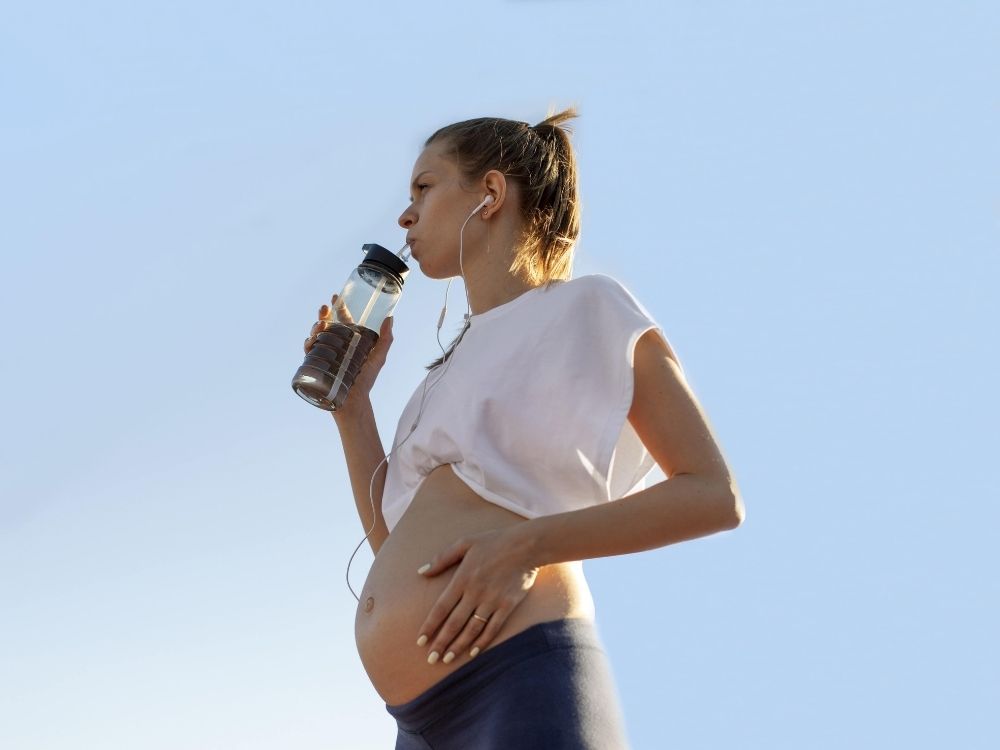
This not only occurs in aspects of daily life, but affects the practice of sports to a greater extent. According to current gynecological knowledge, Sports lovers can continue training during pregnancy as long as they are well.
Sports and relaxation programs for mother and baby
The fetus feels the sensations of its mother while it is in the womb. YesIf sport was important to you before pregnancy, when you get pregnant you don't have to give it up. Regular sport and yoga contribute to the well-being of both.
According to the information portal “Sport und Schwangerschaft” (sport and pregnancy), initiated by the German Sports University in Cologne, an increase in the mother's heart rate also increases the baby's heart rate from 140 to 160 beats per minute.
However, the pulse decreases very quickly, so The mother's sport also serves as a sporting activity for the baby. If the fetus kicks and turns in the womb, the heart rate also briefly rises to 160 or more per minute.
Benefits of sport during pregnancy
Practicing sports during pregnancy can:
- Prevent or relieve back problems
- Reduce fluid retention
- Counteract excessive weight gain
- Strongly reduce the risk of gestational diabetes
- Considerably minimize depression
Is it good to practice yoga during pregnancy?
Autogenic training, such as yoga, reinforces physical sensations. Offers pregnant women relaxation and breathing techniques which many also use during childbirth because they consider them beneficial.
According to a large study from Johns Hopkins University in the US, even the most intense workouts rarely have negative effects on pregnancy.

Practice only the sport that makes you feel good
Basically, The well-being of pregnant women when they perform physical efforts and medical opinion are considered a more important indicator than whether the chosen sport is recommended. for mother and child or not.
It must also be taken into account that you train differently in each phase of pregnancy. The enormous physical changes in the first weeks of pregnancy often cause poor performance.
After approximately three months, hormonal symptoms such as fatigue or nausea are overcome. Between the fourth and sixth month, training usually does not pose any problem. The belly is not yet so bulging as to be bothersome and the body has become accustomed to the hormonal change.
However, due to the greater release of progestogens, You should be careful with sports that put a lot of stress on the joints.. This hormone relaxes the joints and ligaments so that the pelvis dilates more during childbirth. For this reason, all joints are more prone to injury. You also have to be careful when running, since the ankles are more unstable.
It is advisable to wear quality sports shoes and, in the last trimester of pregnancy, even the most experienced runners should walk instead of running to take care of their joints. Sports such as swimming, aqua gymnastics and cycling are great for compensating for the extra weight.
When is it recommended to practice sports during pregnancy?
Gynecologists recommend practicing sports as long as the following premises are met:
- This is not a risky pregnancy.
- The sport does not present the danger of falls, blows and injuries (like handball).
- Sport is not associated with a reduction in oxygen absorption (such as in sports stays at altitudes of more than 2300 meters or long and deep diving dives).
- The sport does not involve strong shaking or vibrations (such as training with a vibrating plate).
What effects does practicing sports have on childbirth?
Statistically, Birth among athletes develops the same as that of women who have not practiced at all or almost no sports during pregnancy.
The pain is perceived in a similar way, but the resistance and tolerance to pain is greater in many athletes, so they need fewer analgesics and auxiliary measures for childbirth.
Recovery after the physical effort of childbirth is also faster for trained pregnant women.

Advice from Dr. Verena Breitenbach
According to Dr. Verena Breitenbach Practicing physical exercise during pregnancy brings a series of benefits for the health of the pregnant woman and the baby..
Sport during pregnancy reduces many risks
Healthy pregnant women They can and should do sports during pregnancy, since it is healthy for them and for the baby.
On the one hand, it strengthens the muscles of the future mother, which makes it easier for the body to handle the weight of the belly.
On the other hand, it reduces the risk of suffering from thrombosis and diabetes and prevents varicose veins and stretch marks during pregnancy. It also reduces ailments associated with pregnancy, such as hyperemesis, as well as lack of supply of the placenta and even the risk of pregnancies.
The child also benefits
It has long been known that sport trains the heart of adults and pregnant women, but a recent study from the Kansas City University of Medicine has revealed that it also the heart of the fetus is trained and benefits from practicing sports, something that has been confirmed with cardiotocographies.
Most sports are allowed
Women should practice the sport that they want and that their instinct tells them. Gymnastics, hiking, yoga and other similar sports do not present any risk, but sports such as jogging do not increase the risk of miscarriage either. No study has shown that horse riding causes more abortions.
The greatest danger is presented by falls and injuries, but even so, nothing rarely happens to the baby. Therefore, sports such as skiing are not considered very suitable.
Only some sports are dangerous
The sports that are discouraged are scuba diving and sports at altitudes above 2500 meters, since oxygen absorption is reduced.
More happiness in pregnancy thanks to sport
In general, sport helps mothers and children process stress better, releases the hormone of happiness and can make pregnancy much easier and more pleasant.
Pregnant women should follow their bodily instincts and intuition to choose the sport that makes them feel good. Taking up new dangerous sports is obviously not a good idea.
And, of course, talk to your gynecologist if problems such as premature contractions, cervical incompetence or other diseases arise.